By Ragdoll Hit · September 26, 2026
Escape Road Vehicles: Lucky Spin Explained
How cash and the lucky spin feed your garage in Escape Road, which vehicle classes fit which driving style, and how to stop wasting spins.
In Escape Road, your getaway car is not cosmetics. Cash spawns on the streets while you run from the police, you feed that cash into the lucky spin, and the lucky spin fills your garage — with everything from nimble sports cars to trucks that treat roadblocks as suggestions. This guide explains how the whole garage economy works and which vehicles are actually worth your spins.
How You Earn Cash
Cash is scattered across the city during your run. The rules that matter:
- Survival time converts to cash. Every extra minute alive is more pickups, so the "drive recklessly for style" plan is strictly worse than the boring "keep surviving" plan.
- Cash sits on your driving line for a reason. The game baits you into detours through intersections — the single most dangerous places in the city — for a pickup you'd have earned anyway thirty seconds later by staying alive.
- A clean escape beats a greedy one. Wreck your car and the run's income stops with it.
How the Lucky Spin Works
Cash doesn't buy vehicles directly — it buys spins, and spins decide what lands in your garage. That layer of randomness is the whole economy: two players with the same bankroll can end up with very different garages.
The practical consequence: spin with a plan, not a feeling.
- Set a spin budget before a session and stop when it's gone. Tilt-spinning after a short run is how bankrolls die in every game with a random reward loop, and this one is no different.
- Big spins after long runs feel lucky; they aren't. Spin results don't know how your last run went.
The Three Kinds of Vehicles (and Who They're For)
The roster spans dozens of vehicles, and the sequels widen it further — Escape Road 2 alone carries 90+ unlocks across sports cars, supercars, racing machines, armored vehicles, and heavy trucks (tanks included). But they all fall into three working classes, and the class matters far more than the paint job:
Nimble sports cars
Fast acceleration, sharp steering, paper frame. In a sports car the city is a slalom: you weave traffic, cut alleys, and outrun the response instead of fighting it. This is the class for players who read traffic two intersections ahead.
Where it shines: alleys, ramps, and the first two minutes of a pursuit when everything is still fast and light.
Balanced sedans and muscle
The middle of the roster. Enough weight to bump through a stray cruiser, enough speed to stay ahead of interceptors. If you're not sure what your driving style is yet, this class tells you — whichever direction you miss (speed or weight) is the class you actually want.
Heavy trucks and bruisers
Slow to spin up, barely steers, and simply doesn't care. Roadblocks that end a sports-car run are speed bumps here. The truck playstyle is route discipline: pick wide roads early, commit to straight lines, and let the police donate their cruisers to your front bumper.
Where it shines: late pursuit phases, when the response has escalated to roadblocks and heavy units and the light cars start dying in bunches.
Which Class Should You Spin For?
Honestly: the one that matches how you already die.
- Die boxed-in at intersections? → You're steering into traps; a heavier vehicle forgives that.
- Die on straightaways, outrun? → You need acceleration, not armor. Sports class.
- Die in alleys and dead ends? → No vehicle fixes navigation. That's a routing problem — see the tips section on our Escape Road page.
The Sequels Go Bigger
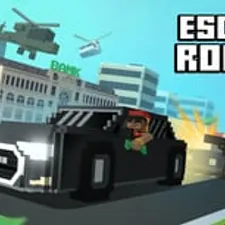
If you burn through the original's garage:
- Escape Road 2 — the sequel with a massive map, SWAT trucks joining the chase, and 90+ unlockable vehicles.
- Escape Road 3 — dynamic weather, smarter pursuit AI, and the biggest open world of the three.
The class logic above carries over: every version of Escape Road is still "your handling versus their numbers."
How Escape Road 3 changes the garage
The third game rebuilds the garage economy around rarity. Per Drifted's Escape Road 3 guide, the roster grows to 93 vehicles sorted into five rarity tiers — Common up through Mythic — plus 31 unlockable characters, and everything comes from the spin: there is no direct purchase and no traditional tuning/upgrade system. Improvements come from pickups you grab during the chase itself.
What rarity tiers mean in practice: your cash buys the same spin every time, but the wheel's floor is Common and its ceiling is Mythic. High-tier drops are rare by design, so the smart play doesn't change — budget your spins, don't chase a name. A Common you drive well beats a Mythic you never land.
The ER3 economy, in hard numbers
Drifted's full guide documents the details worth knowing before your first spin:
- A spin costs $500. The daily login bonus cycles $100 → $250 → $500 across seven days, so day-seven players spin for free.
- The slot machine has two wheels. The left one rolls rarity (Common, Rare, Epic, Legendary, Mythic); the right one decides whether you get a vehicle or a character. Characters drop noticeably less often — expect your first several spins to be all cars.
- The Mythic tier has exactly three vehicles, each with its own teaser line: the F1 ULTIMATE ("No brakes. No mercy."), the XT3000 ("Where others stop, it goes."), and the Zombie Smasher ("The road belongs to the living."). They're the strongest rides in the game, and the longest odds on the wheel.
- Your starter garage is free: a '69 Mustang, an S8-style sedan, and a Cybertruck-alike — three cars before you've spun once. And per Drifted, hijacking carries over from City 2: nearly anything on land or water, police cruisers included, can be stolen mid-chase.
- Achievements are the real income. 84 goals, many paying cash — the starred ones award exclusive vehicles on top. If you're grinding spin money, the achievement screen pays better than surviving longer.
Quick Answers
Is it worth spinning early, or should I save cash?
Spin once early so the garage stops being empty, then save until you can spin without wiping your bankroll. The first spins are cheap fun; the last spins should be deliberate.
Do heavier vehicles actually survive roadblocks?
Yes — that's their entire job. The trade is acceleration and alley-work. You can't have both; that's the garage.
Can you buy cars directly without the spin?
No — the spin is the only door to the garage, in every version. In Escape Road 3 especially, all 93 vehicles and 31 characters come from spins (Drifted's guide); cash buys chances, not cars.
How many vehicles does each game have?
The original spans dozens; Escape Road 2 goes to 90+; Escape Road 3 tops out at 93 across five rarity tiers.
Does the starting car matter long-term?
Only for your first hour. Everything after that is lucky spin results and class choice.
Keep Playing
- Escape Road — the original police chase
- Escape Road 2 — 90+ vehicles, SWAT trucks
- Moto X3M — different genre, same "your handling versus the course" energy